
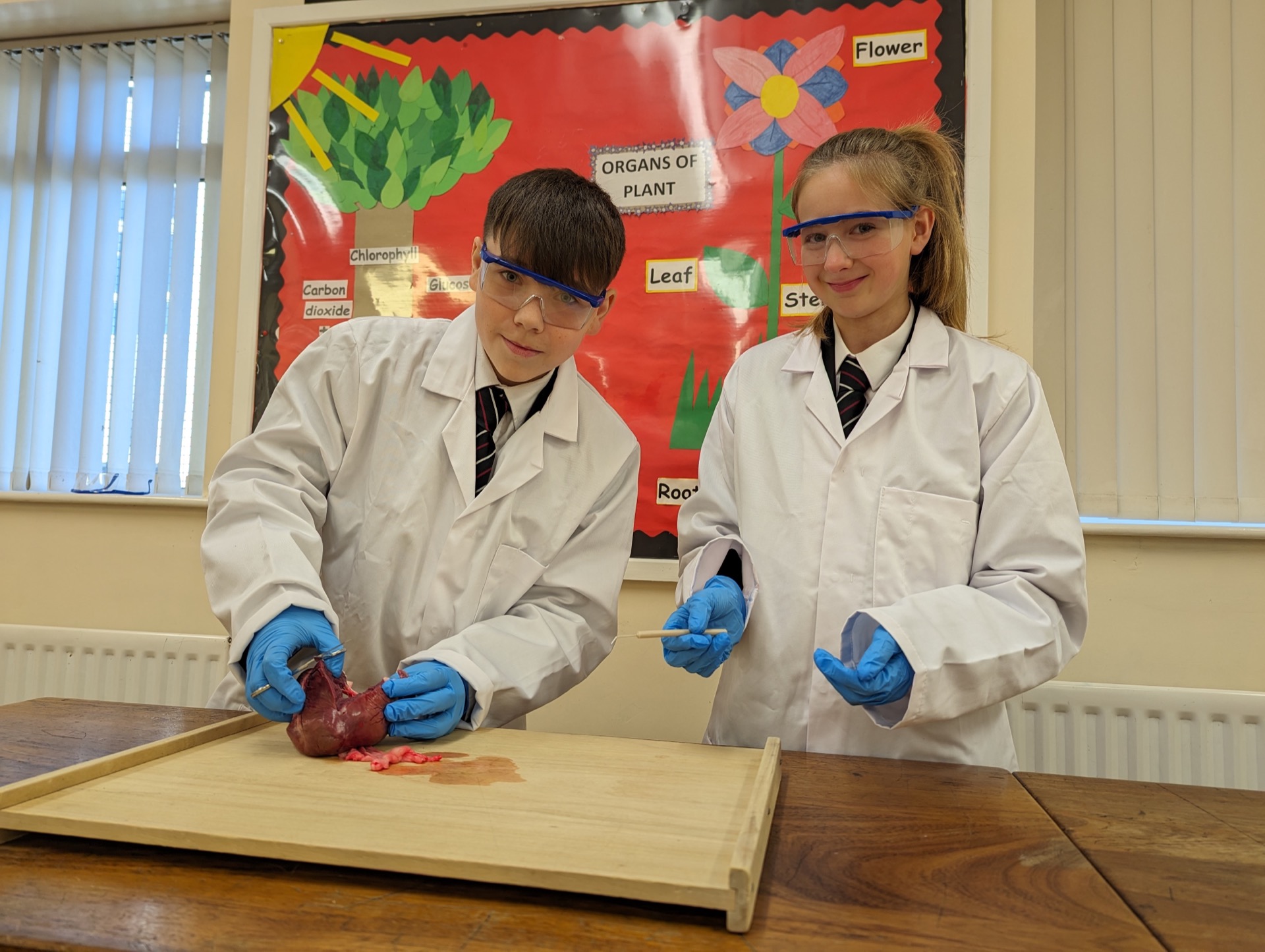
The ethos behind the teaching of Science at Cullybackey College is to try and capture a pupil’s natural curiosity about the world around them and in turn to inspire them to develop that curiosity into learning that is both active and independent.
Subject:
Technology & Design
Levels Taught:
KS3
GCSE/KS4
A-Level/KS5
Staff:
Ms L Kelly Davidson – (HoD)
Mrs J Greer
Mr A McPeake
Mr W Baird (Technician)
KS3:
(Subject/Topic Content)
Year 8
Year 8 the main focus is for pupils to gain confidence using tools and machinery safely within a workshop environment.
- Health & Safety
- Mobile Phone Holder (Plastic)
- Safety Soldering (Electronics)
- Keyfob Torch (Plastic/ Electronics)
- Bot Block (Wood)
All projects include simple Design and Communication of ideas through 2 and 3D graphics. Theory is taught alongside practical projects.
Year 9
Year 9 the main focus is for pupils to build upon their confidence using new types of tools and machinery safely within a workshop environment.
COSHH (Health & Safety)
LED Light Decoration (Plastic / Electronics)
CAM Toy (Mechanisms)
Year 10
Health & Safety in the Construction Industry
Money Box (Wood / Plastic)
Nightlight Project (Plastic / Electronics)
Calendar Cube (Wood)
All pupils have been given an insight into the different aspects of Technology and Design throughout Key Stage 3 as well as exploring the vast employment opportunities available within the world of work. This should give the opportunity to make an informed choice to which career path they wish to follow and the subject choices in Key Stage 4.
GCSE/KS4:
(Subject/Topic Content)
Subjects offered at KS4 (GCSE) Technology & Design
- GCSE Construction (CCEA)
- Technology & Design (CCEA)
- Occupational Studies Carpentry & Joinery (CCEA)
- Motor Vehicle & Road User Studies (CCEA)
GCSE Construction – Course Content
This qualification features up-to-date content that reflects modern-day practices in the construction industry. It encourages students to develop their knowledge of the construction industry and the built environment. They then apply this knowledge in relevant and work-related contexts. They learn to interpret drawings of domestic buildings and explore the materials and sustainable methods used in domestic and commercial construction. The specification also helps students to appreciate the importance of health and safety in the construction industry.
To enhance their practical skills, students complete a craft project based on woodwork. They also develop their computer aided design (CAD) knowledge, understanding and skills by producing a portfolio of work.
GCSE in Construction and the Built Environment is unitised, so it’s possible to take part of the assessment at the end of the first year of study.
The specification has four units:
Unit 1: Introduction to the Built Environment 25%
Unit 2: Sustainable Construction 25%
Unit 3: The Construction Craft Project 25%
Unit 4: Computer Aided Design in Construction. 25%
Technology & Design – Course Content
The GCSE Technology and Design specification encourages students to be innovative and prepared to take design risks.
Students explore the creative, engineering and manufacturing industries, as well as the importance of high-quality technology and design.
Our GCSE Technology and Design specification provides students with a core of knowledge in the following key areas before they choose to specialise in one:
- electronic and microelectronic control systems
- mechanical and pneumatic control systems
- product design.
There are two written exams, each worth 25% of the final mark, and a design and manufacturing project worth 50%.
This qualification builds on the knowledge, understanding and skills developed through the Science and Technology Area of Learning and the Cross-Curricular Skill of Using ICT.
This specification is unitised, so it’s possible to take part of the assessment at the end of the first year of study.
The specification has three units:
- Unit 1: Technology and Design Core Content
- Unit 2: Optional Areas of Study
- Unit 3: NEA (Non-Examination Assessment – Formal Portfolio/ manufacturing of a product)
Occupational Studies (Carpentry & Joinery) Course Content
Occupational Studies encourages learners to be motivated and inspired by following a broad, coherent and satisfying course of study. It gives them opportunities to sample work-related learning within coherent occupational contexts and to develop their skills in literacy, numeracy and ICT. It should also prepare learners to make informed decisions about further learning opportunities and careers.
Occupational Studies should enable learners to:
- develop the knowledge, understanding and skills they need to undertake work-based tasks.
- engage actively in work-based learning within coherent occupational contexts.
- reflect on their learning.
- develop an appreciation of the progression/career opportunities that exist through the study of Occupational Studies.
- develop an appreciation of the environmental impacts of the practical tasks they carry out within occupational contexts; and
- develop an awareness of general and specific health and safety issues arising from activities within occupational contexts.
At Cullybackey students complete the ‘Construction Pathway’ involving Bench Joinery (year 11) and Carpentry and Joinery (year 12).
Year 11 Breakdown – Planter Project
AO1 – Health & Safety, Environmental Issues, Careers, Materials and Tools. (20%)
A02 – Practical Application (60%)
A03 – Task/ Final Evaluation (20%)
*Coursework is submitted to CCEA at the end of year 11.
Year 12 Breakdown – Birdhouse Project
AO1 – Health & Safety, Environmental Issues, Careers, Materials and Tools. (20%)
A02 – Practical Application (60%)
A03 – Task/ Final Evaluation (20%)
*Both marks are added together to produce a Level 1/ 2 result at the end of the year
MVRUS Course Content
The CCEA GCSE Motor Vehicle and Road User Studies specification prepares students to become responsible road users. It develops their interest in and appreciation of the motor vehicle.
Students develop knowledge of the Highway Code. They learn about driving at night and under adverse conditions, as well as the causes and prevention of road traffic collisions.
They carry out a practical riding activity on a moped and investigate a real-life traffic situation. They discover road users’ responsibilities and legal requirements. They explore motor vehicle and road user theory.
The specification has three units:
- Unit 1: Motor Vehicle and Road Use Theory – External written examination
- Unit 2: Investigative Study
- Unit 3: Practical Riding Activity.
GCSE/KS4:
(Additional Links)
https://ccea.org.uk/key-stage-4/vocational/subjects/level-1-and-level-2-occupational-studies-2013
https://ccea.org.uk/key-stage-4/gcse/subjects/gcse-construction-and-built-environment-2017
https://ccea.org.uk/key-stage-4/gcse/subjects/gcse-technology-and-design-2017
https://ccea.org.uk/key-stage-4/gcse/subjects/gcse-motor-vehicle-and-road-user-studies-2017
https://www.bbc.co.uk/bitesize/subjects/zvvwvj6
KS5:
(Subject/Topic Content)
KS5 (A Level) Technology & Design
Product Design (WJEC)
The WJEC GCE in Design and Technology offers a unique opportunity in the curriculum for learners to identify and solve real problems by designing and making products or systems. Design and technology is an inspiring, rigorous and practical subject. This specification encourages learners to use creativity and imagination when applying iterative design processes to develop and modify designs, and to design and make prototypes that solve real world problems, considering their own and others’ needs, wants, aspirations and values.
AS Unit 1: Written examination- 2 hours 20% of qualification
AS Unit 2: Design and make task non-exam assessment: approximately 40 hours 20% of qualification
A2 Unit 3: Written examination- 2 hours 30 minutes 30% of qualification
A2 Unit 4: Design and make project non-exam assessment: approximately 60 hours 30% of qualification
Examinations (Unit 1 & 3)
The examination includes a mix of structured and extended writing questions assessing learners’ knowledge and understanding of:
- technical principles
- designing and making principles along with their ability to:
- analyse and evaluate design decisions and wider issues in design and technology.
NEA (Unit 2 & 4)
A design and make task, based on a brief developed by the candidate, assessing the candidate’s ability to:
- identify, investigate and outline design possibilities
- design and make prototypes
- analyse and evaluate design decisions and wider issues in design and technology.
The design and make task will be based within the same endorsed area as the written examination.
KS5:
(Additional Links)
https://resources.wjec.co.uk/en
https://resources-legacy.wjec.co.uk/